So you got off the plane, you are at the peak of your excitement while watching the Spanish architecture from the taxi window, and you want to eat ‘tapas’. Every video, article, or TV show that got you to visit Spain mentioned that people eat ‘tapas’. And now you want to be the one trying ‘tapas’ – as soon as possible.
But what are tapas? Do you go to any restaurant and point at the menu to where it simply says ‘tapas’? In some highly touristy places, that could happen. But that is not what you want.
The simplest way of guiding you how to get tapas is by explaining that tapas are small portions of food meant to be shared. They can be cold, like Jamón ibérico, fried, like Croquetas, or hot, like Gambas al Ajillo. You can get them for free with your drink in places like Granada, or you’d pay for them in cities like Sevilla.
This way of eating is called “tapear” or “going for tapas”. It’s a way of informal eating with family and friends. It’s so popular that Spaniards are seeking to have it declared part of UNESCO’s Intangible Cultural Heritage of Humanity.
Table of Contents
Why do they call it a Tapa?
In a non-food sense, ‘tapa’ in Spanish means ‘lid’ in English. So, something you use to cover a pot, a cup, or a glass. That’s what happened with the first form of the tapa: it was used to cover the wine glass, to protect it from flies and dust.
Why do they give out free Tapas?
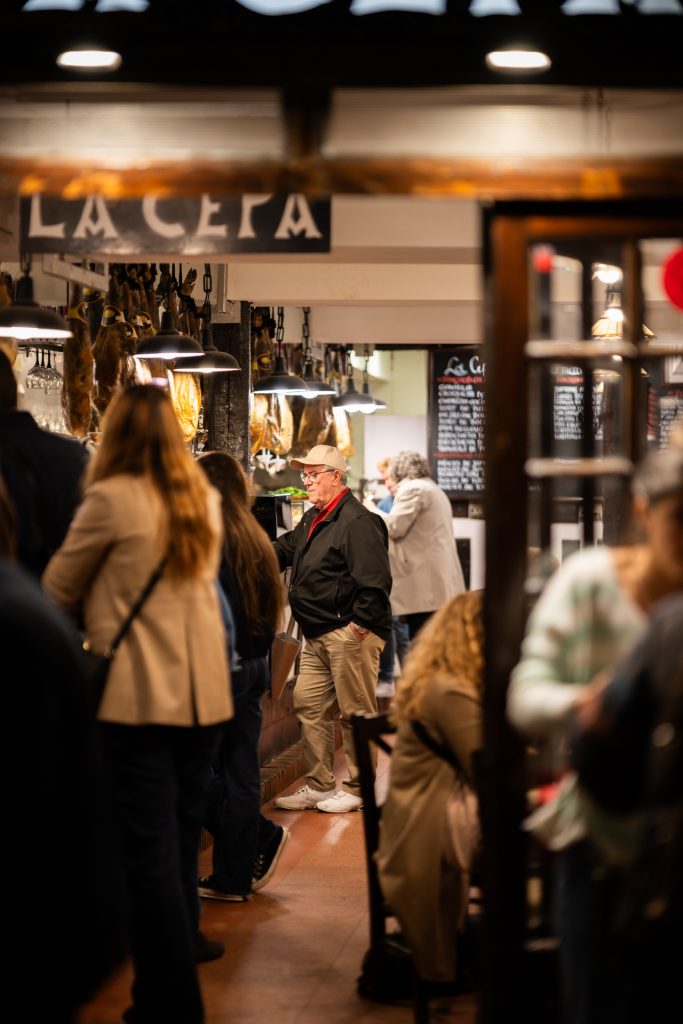
Legend has it that in the 13th century, King Alfonso X “The Wise” dictated that drinks need to be accompanied by a small snack to prevent people from getting drunk too fast.
Later in the 18th century, since in Andalusia taverns, wine cellars and grocery stores were all next to each other, people would be able to buy wine by the glass at the grocery stores and receive food samples, before they could decide their shopping. The book “Seville Banquets, Tapas, and Menus, 1863–1995: An Anthropology of Food,” explains that by 1795, a place that sold wine by the glass could also have tables with chairs and serve cold and fried food.
Then in the late 19th century and the early 20th century, when King Alfonso XIII reigned, another tapas origin legend was born, placing him at the center of it. It is said that, while he was having a sherry at an inn in Andalucia, the waiter saw a speck of dust approaching the king’s glass, so he quickly placed a piece of sausage over it, to protect the drink. King Alfonso XIII didn’t let the sausage go to waste, so he ate it after he had the sherry.
Nowadays, there are only a few cities where bars and restaurants still give a free tapa with your drink: Granada, Jaén, Almería, and Leon. They do this because it’s so ingrained in their culture, they can’t stop.
The Evolution of Tapas
People have been sharing food while drinking wine for centuries but the ‘tapa’ as a word to reference a Spanish dish was born in Andalucia. One of the earliest references was at the end of June 1903 when Nicolás Rivero Muñiz wrote about his trip to Sevilla where he started his meal by preparing the stomach with wine and “tapaera”, meaning paper-thin slices of Vich sausage or mountain-cured ham.
Later in 1918, Manuel Rodríguez-Navas y Carrasco explained in his General and Technical Hispanic-American Dictionary that ‘tapa’ could mean olives, sausage, or another small cold bite served with glasses of beer or wine in grocery-taverns and bars. Then in 1938, café Granja Nacional was advertising itself as one of the best places in Granada to get the finest assortment of wines, spirits, and beers, and a select variety of hot tapas.
When did tapas spread beyond Andalucía
Tapas became so loved that they expanded out of Andalucia into all of Spain. There are records of restaurants opening and serving tapas for people to enjoy:
- in Oviedo at pescadería La Jerezana, in 1923
- in Catalonia at café restaurant Andalucía, in 1928
- In Murcia at Ideal Palace, in 1929
- In Tenerife at Los Caracoles, in 1932
- in Menorca at bar Sevilla, in 1934
- in Lugo at Bar Guillermo, in 1934
- in Madrid at El Generalife, in the 1930’s
The start of Elaborate Tapas
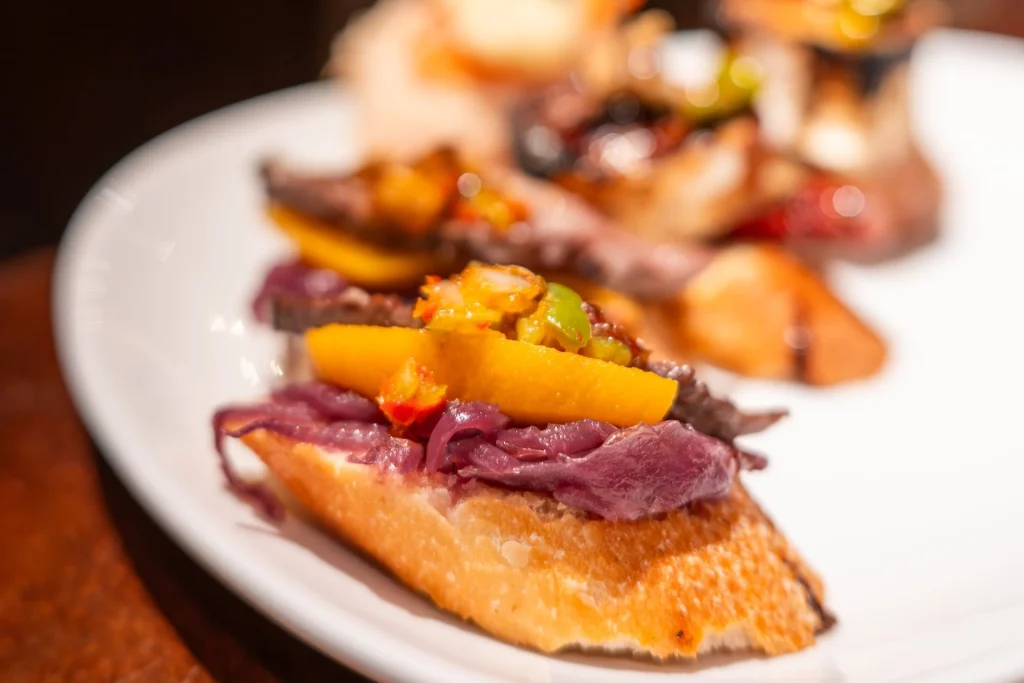
The phenomenon not only expanded in geography, but also in variety and creativity. In 1924 for example, Bar Jarque from Valencia was advertising it offers 59 different tapas, some of which were their own creation.
Later, around 1990-2000, fine dining pintxos arrived because of Basque creativity. And in Cordoba, there were centrally located restaurants were offering more elaborate tapas like Octopus and smoked ear, caramelized rib fajita with sugar cane honey, Oxtail ‘churro’ with chocolate, and Córdoba-style oxtail moussaka. These dishes were not free, marking the moment when tapas were split into two categories: those offered free with a drink – which were smaller; and those people paid for – which were larger and more elaborate.
Chef Ferrán Adriá considers 1992 the moment tapas became contemporary, using his book “elBulli, the Taste of the Mediterranean” as a pillar, and including tapas in his tasting menu of 10 to 40 dishes, at Restaurant elBulli.
Today, tapas culture continues to evolve: Michelin-starred restaurants reimagine traditional dishes while neighbourhood bars maintain centuries-old recipes. The thread connecting all of it is the same principle that started with a piece of jamón on a wine glass: food shared with others, without formality.
Sources:
- Real Academia de Gastronomía; The Art of Tapas
- Real Academia de Gastronomía; Revista Española de Cultura Gastronómica – La Tapa
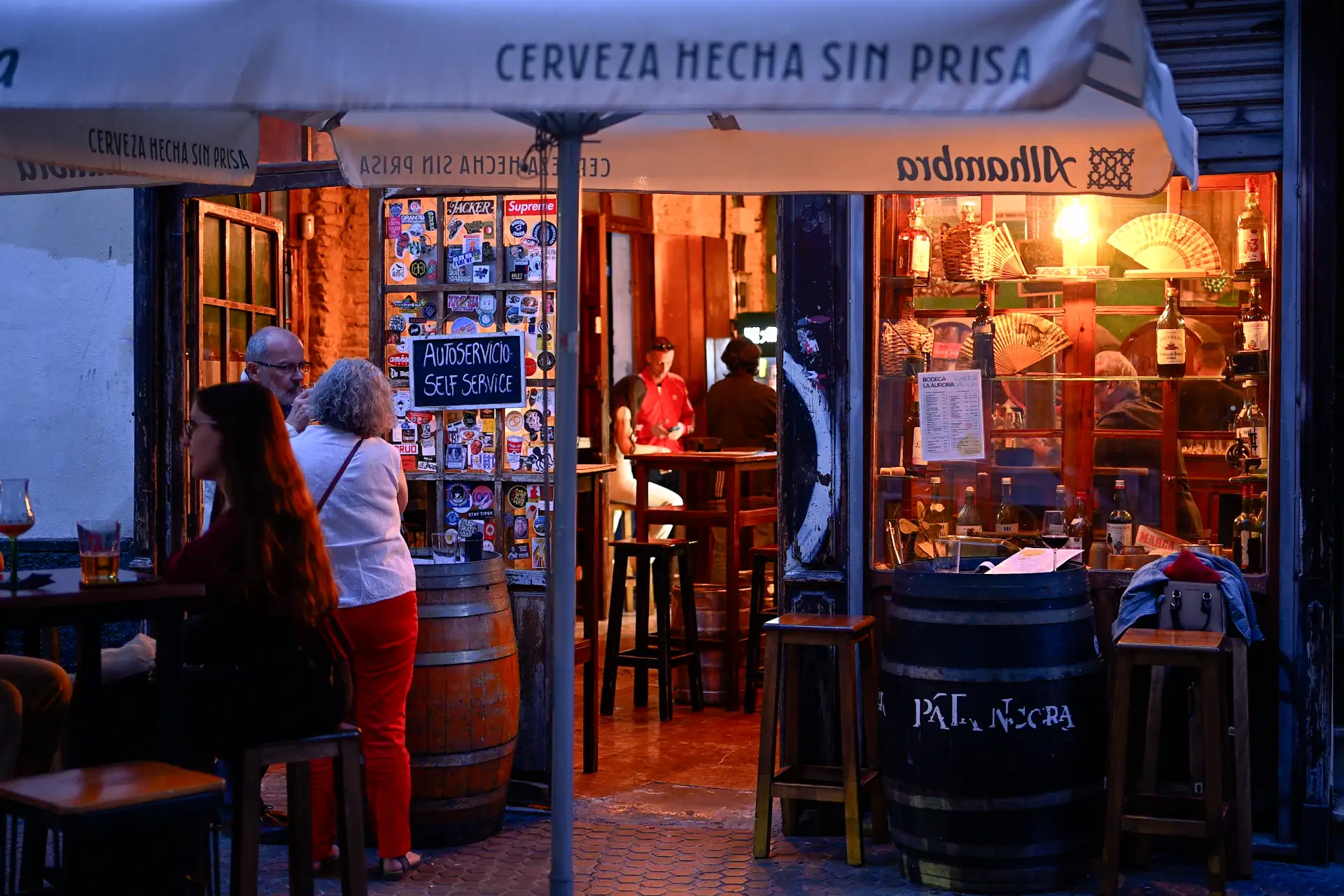
How to Eat Tapas Like a Local
You’ve heard how amazing Spanish food is, so you might want to know how to eat tapas like a local – and get the most authentic experience. There no secret language, just habbits you can easily learn.
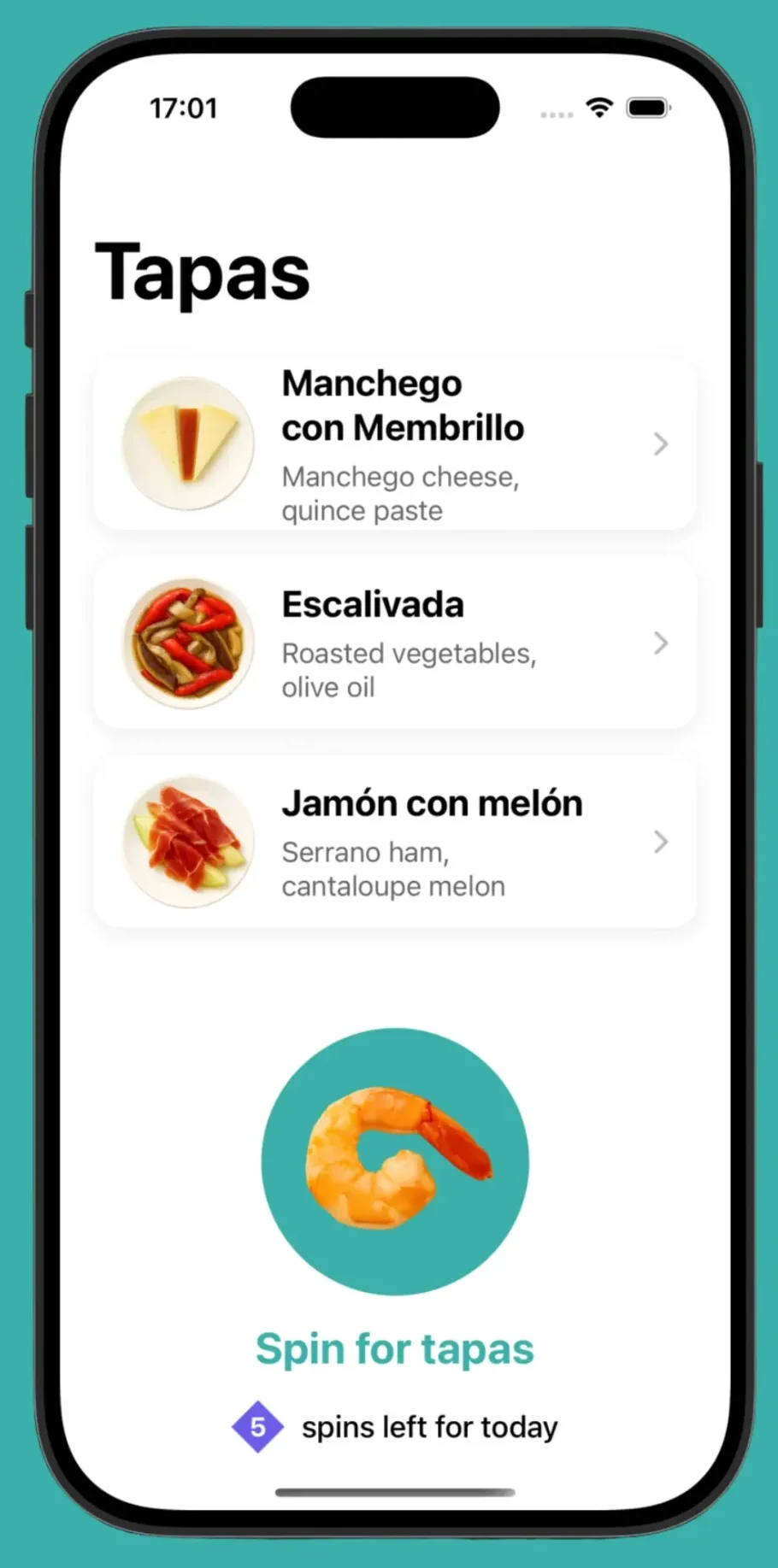
Read moreTapas Spinner
Discover your next Spanish tapa
Tap once. Get 3 tapas ideas.
50+ tapas · 5 taps a day · Works offline

STAY IN SPAIN
Planning a trip to Spain?
Find a place to stay and make your next food adventure one to remember.